The problem
Pricing managers at Sam's Club couldn't act until they'd done research the tool should have done for them. Finding the right items meant leaving the platform entirely: opening Excel or SQL, building a working list, then returning to price.
Once inside the tool, filters reset every session, approval context was missing, and results weren't ordered by relevance. Ninety-five percent of price changes were still flowing through overnight spreadsheet templates on a platform designed to replace them. On a system processing 83 million price changes a year, that's not a UX problem. That's a business problem.
"Every power user on the team was blocked by the 20-item cap. Nobody could search by Sign ID. Filters reset every session, so everyone started over every time they logged in."
Composite finding from five moderated usability sessions, 60 minutes each.
Four concept directions all failed at exactly the same point. That wasn't a design problem — it was a signal that the requirements hadn't accounted for how pricing managers actually worked. The session recordings went directly to the product team. The Product Requirements Document (PRD) was rewritten before development began. What shipped reflected the real workflow, not the assumed one. The research findings also traveled beyond the original project, reshaping global navigation across the broader Fusion ecosystem. This was the first formal usability study the Pricing org had ever run.
Research & discovery
Four compliant concepts, brought to usability sessions to find the ceiling of what the existing requirements could support. Every concept failed at the same point — not because the designs were wrong, but because the requirements hadn't accounted for how pricing managers actually worked. Session recordings went directly to the product team. The Product Requirements Document was rewritten before development began.
Key findings
- The exit-to-Excel pattern was load-bearing. Users weren't leaving the platform out of habit. They were leaving because it couldn't do what they needed. The workaround was structural.
- Filters were ephemeral. Every session started from scratch. For pricing managers working large item sets across multiple sessions, this created significant overhead.
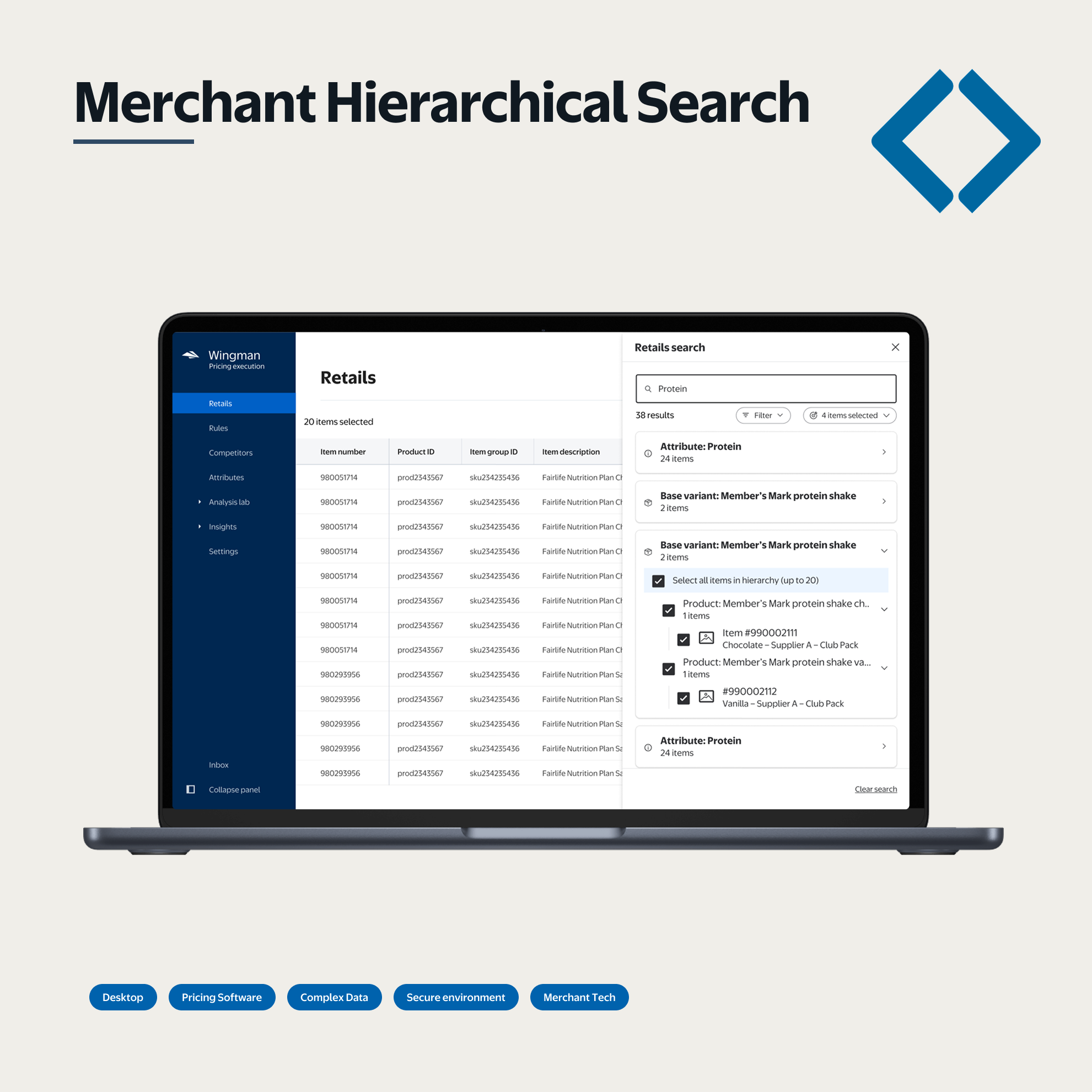
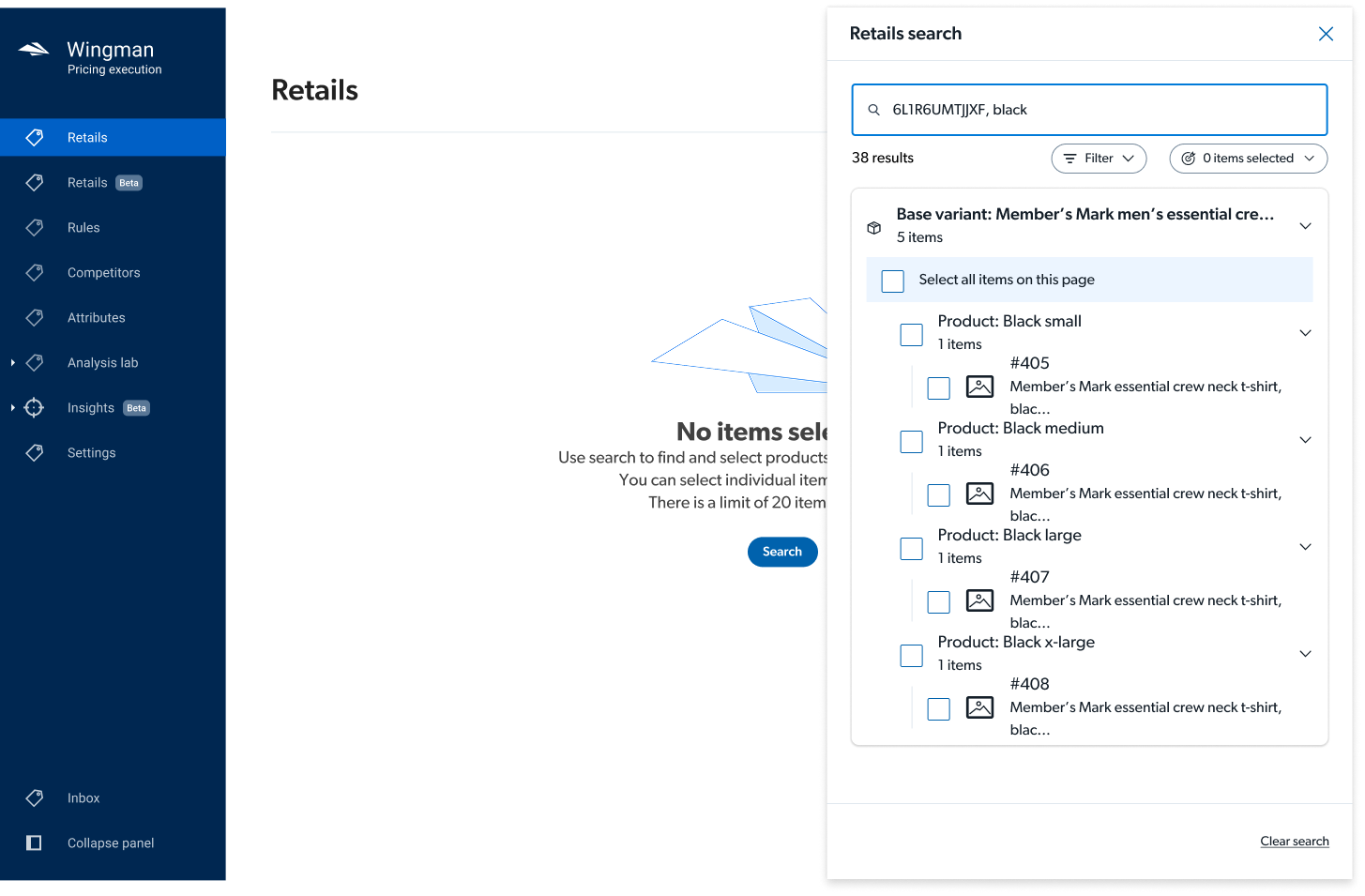
- Search lacked hierarchy awareness. Pricing at Sam's Club is hierarchical: you price a category, a subcategory, a product line. The search returned flat results that didn't reflect how the work was actually organized.
- Requirements had a blind spot. The existing PRD was written without input from observed working sessions. Four distinct design directions all broke at the same point, which was the signal that we had a requirements problem, not a design problem.
Design process
The first formal usability study the Pricing org had ever conducted. Running four concepts in parallel was deliberate: the goal was surfacing requirements gaps, not just design preferences.
Key design decisions
- Persistent filters. Filter state now persists across sessions. Pricing managers working large item sets no longer rebuild their context from scratch on every login.
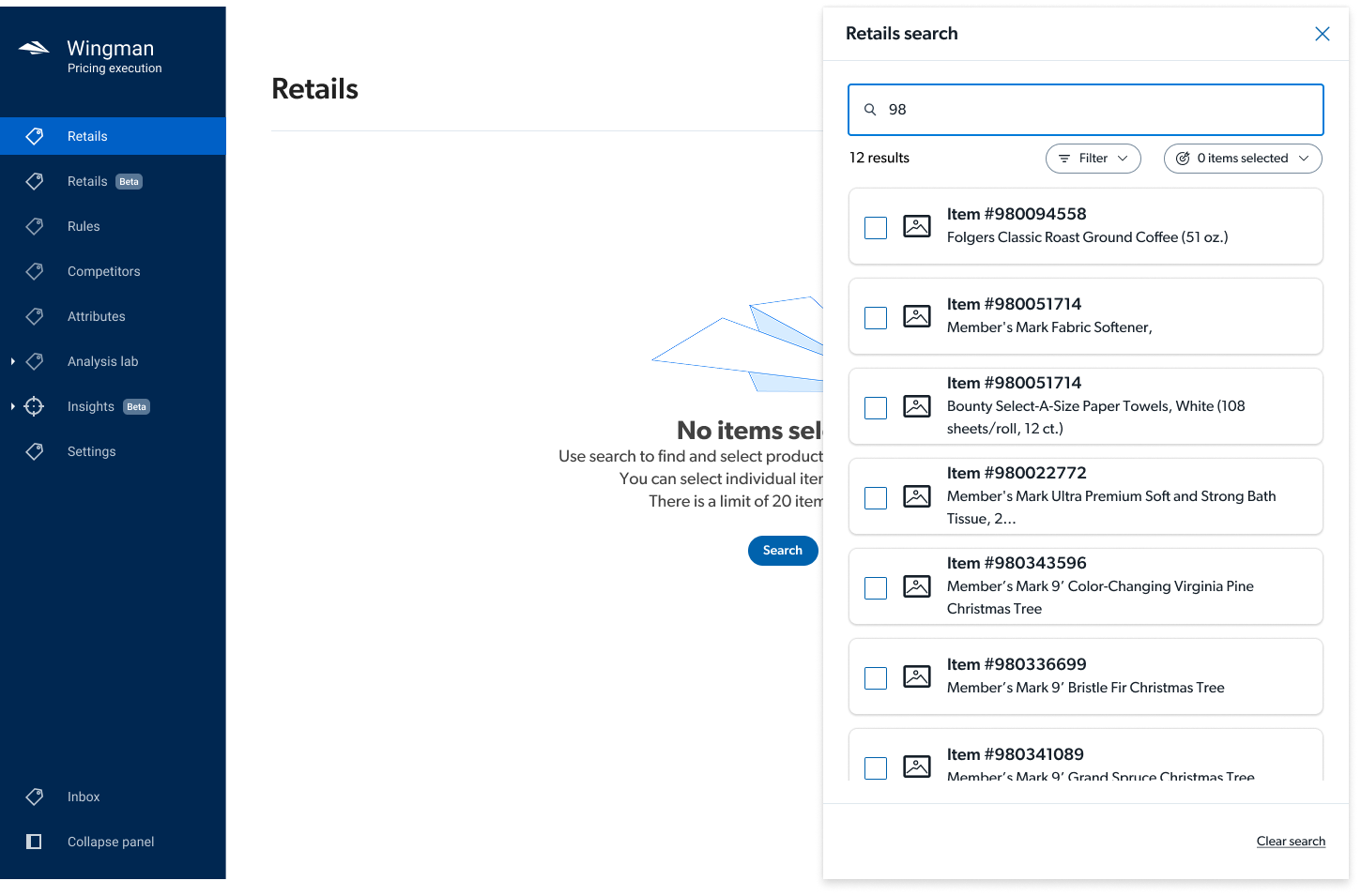
- Sign ID search. Added direct search by Sign ID, a lookup pattern pricing managers used constantly outside the tool and couldn't do inside it.
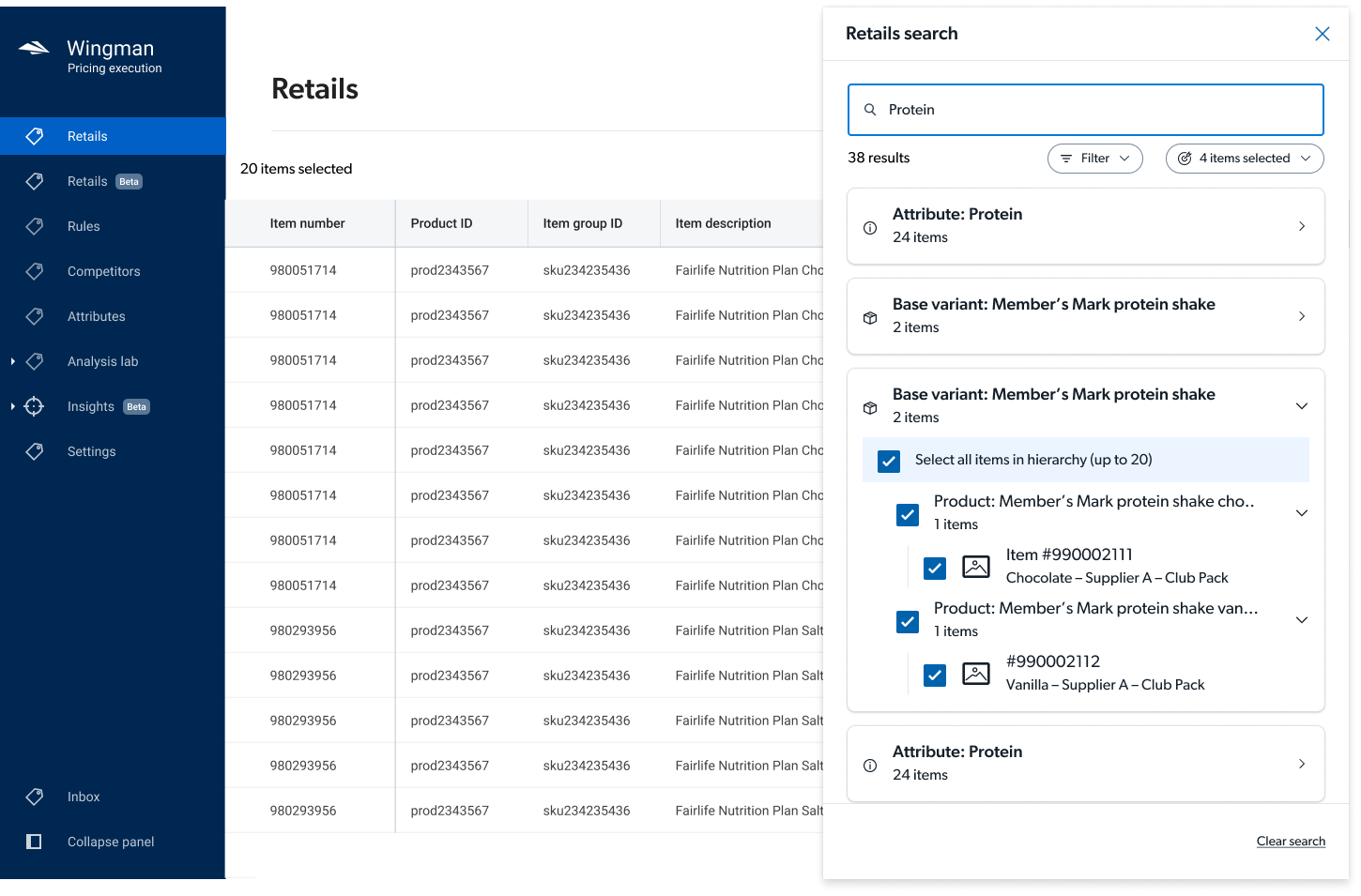
- Hierarchy-based navigation. Search results are organized to reflect the actual structure of pricing work: category, subcategory, product line. Not flat item lists.
- Bulk selection patterns. Built for real working scale: pricing managers often need to act on dozens of items at once, not one at a time.
Outcomes & impact
6.4/7 usability, 6.2/7 satisfaction. Four features shipped. Research findings expanded beyond scope, informing global navigation across the Fusion ecosystem. The process became a model — not just the output.
- 6.4 / 7 usability score
- 6.2 / 7 satisfaction score
- PRD rewritten before development began
- 4 features shipped
- Research informed cross-product navigation improvements across Fusion
- First formal usability study in the Pricing org
- 9.25 / 10 peer recommendation score