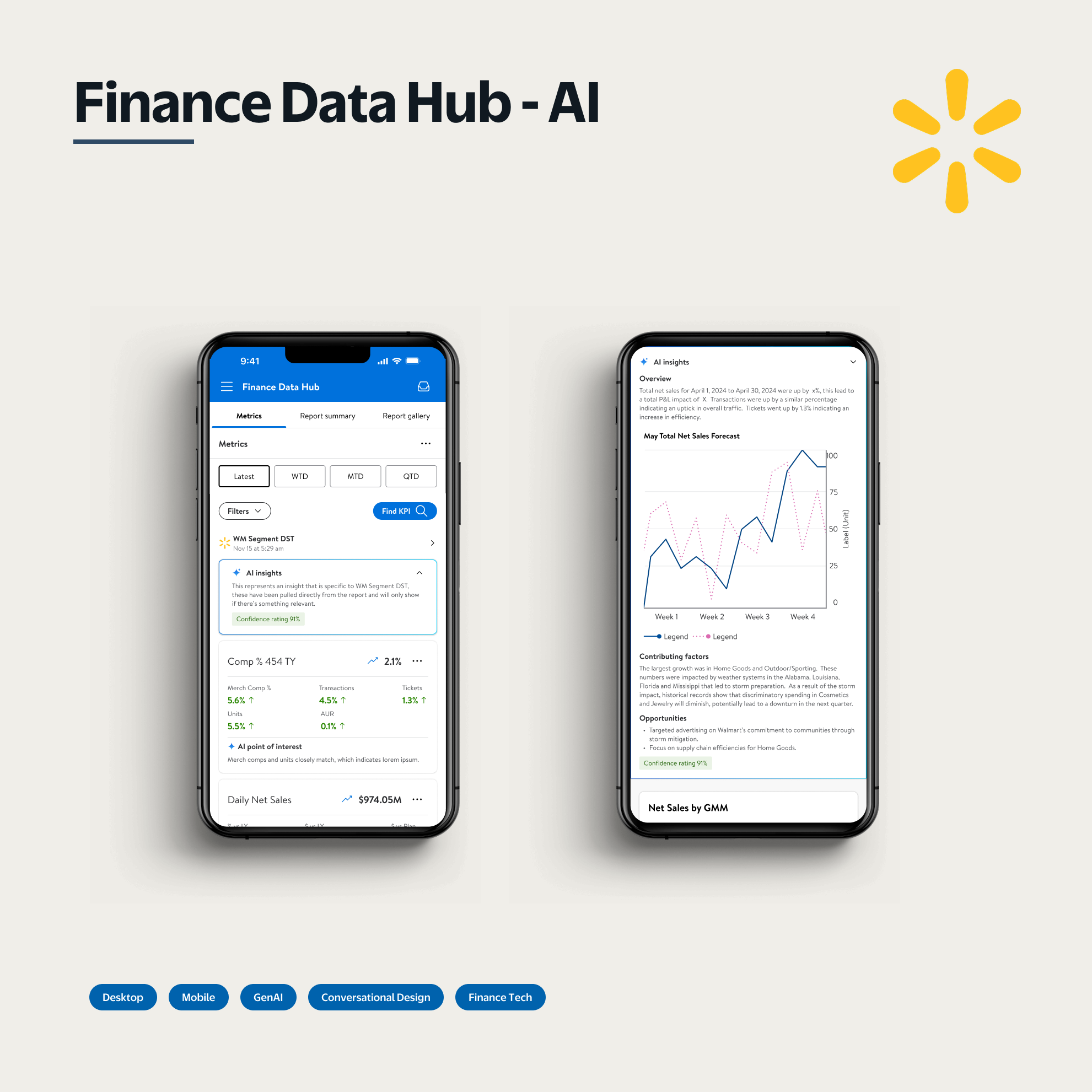
The problem
Finance teams had data across multiple systems and no reliable way to connect them. Correlating supplier data, spend trends, and exceptions meant leaving each tool to manually assemble something the platform should have done automatically.
The Finance Data Hub brought those sources together. But layering AI on top introduced the harder problem: how do you design for trust when users can't fully verify what the AI is telling them?
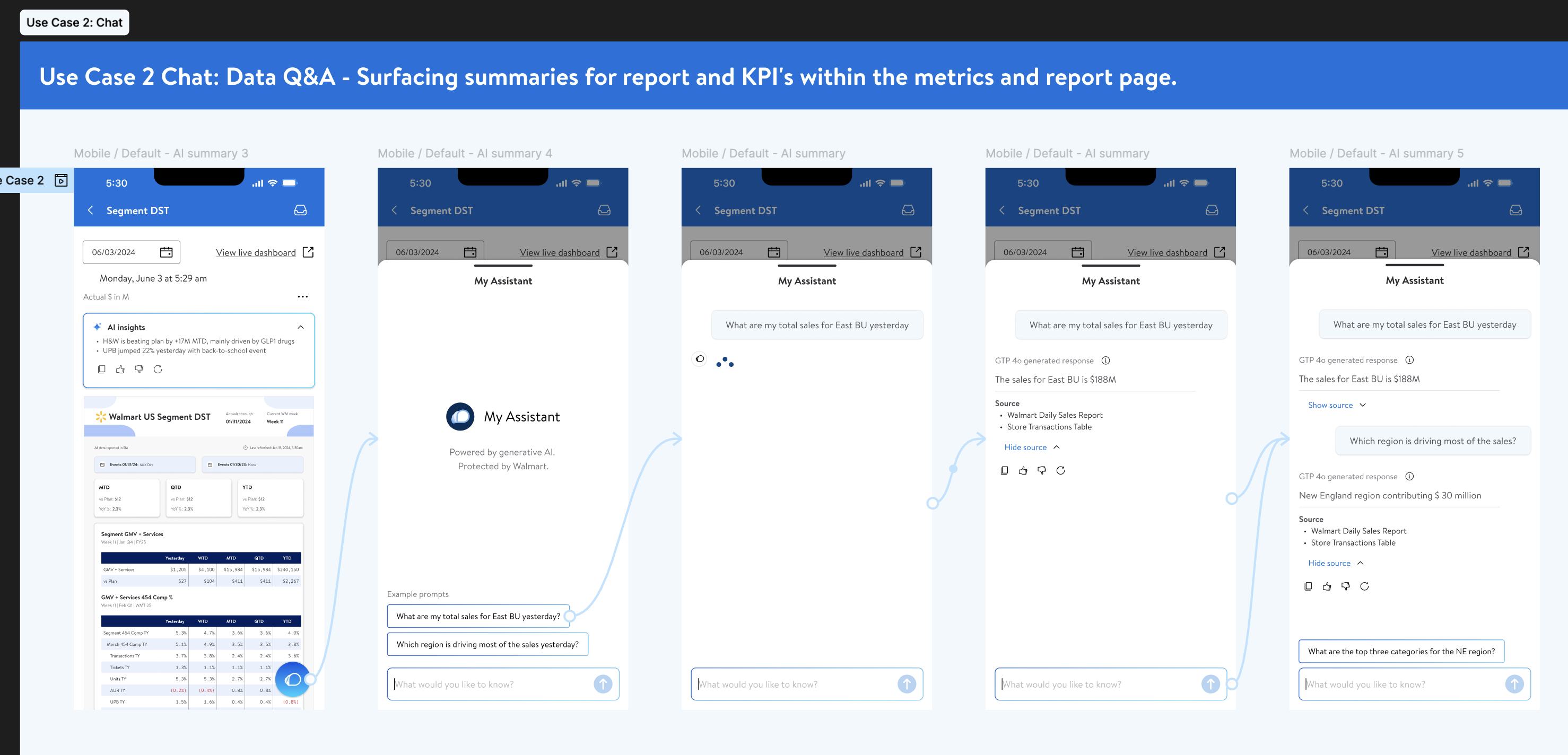
"AI hallucinates a lot if you jump between threads."
From a knowledge transfer session with the product team. That line became the brief for the entire conversation architecture.
One observation from a knowledge transfer session became the brief for the entire conversation architecture. It defined the thread isolation pattern, the source citation on every response, and the confidence labeling that made the AI layer trustworthy rather than opaque. The work was presented to Doug McMillon's leadership team as a model for how Walmart could integrate AI at the enterprise level without eroding user trust in the underlying data. 87.5% user satisfaction after launch.
Research & discovery
The challenge wasn't the AI model — it was the UX patterns for surfacing, labeling, and tracing recommendations. Finance users needed to understand not just what the AI recommended, but why, and they needed to be able to push back.
Key findings
- Transparency in the recommendation logic was as important as the recommendation itself. Users who couldn't see the basis for an AI output either ignored it or over-relied on it. Neither was acceptable in a finance context.
- Source traceability was a trust-builder. When users could follow a recommendation back to its underlying data, their confidence in acting on it increased significantly.
- AI surfacing patterns needed to match financial investigation patterns. Finance teams investigate by drilling down: from trend to category to transaction. AI recommendations that surfaced at the wrong level of that hierarchy created friction rather than clarity.
Design process
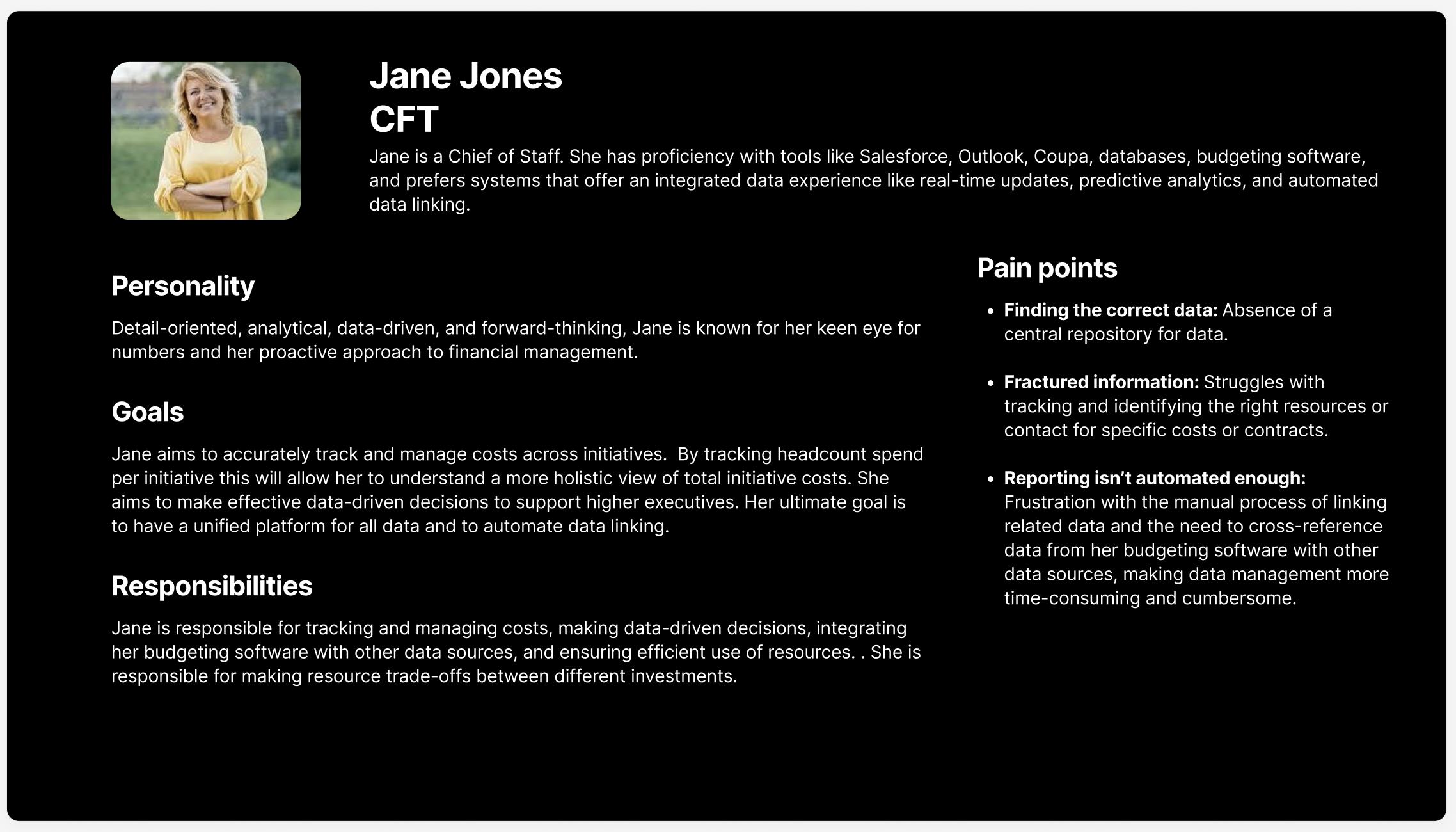
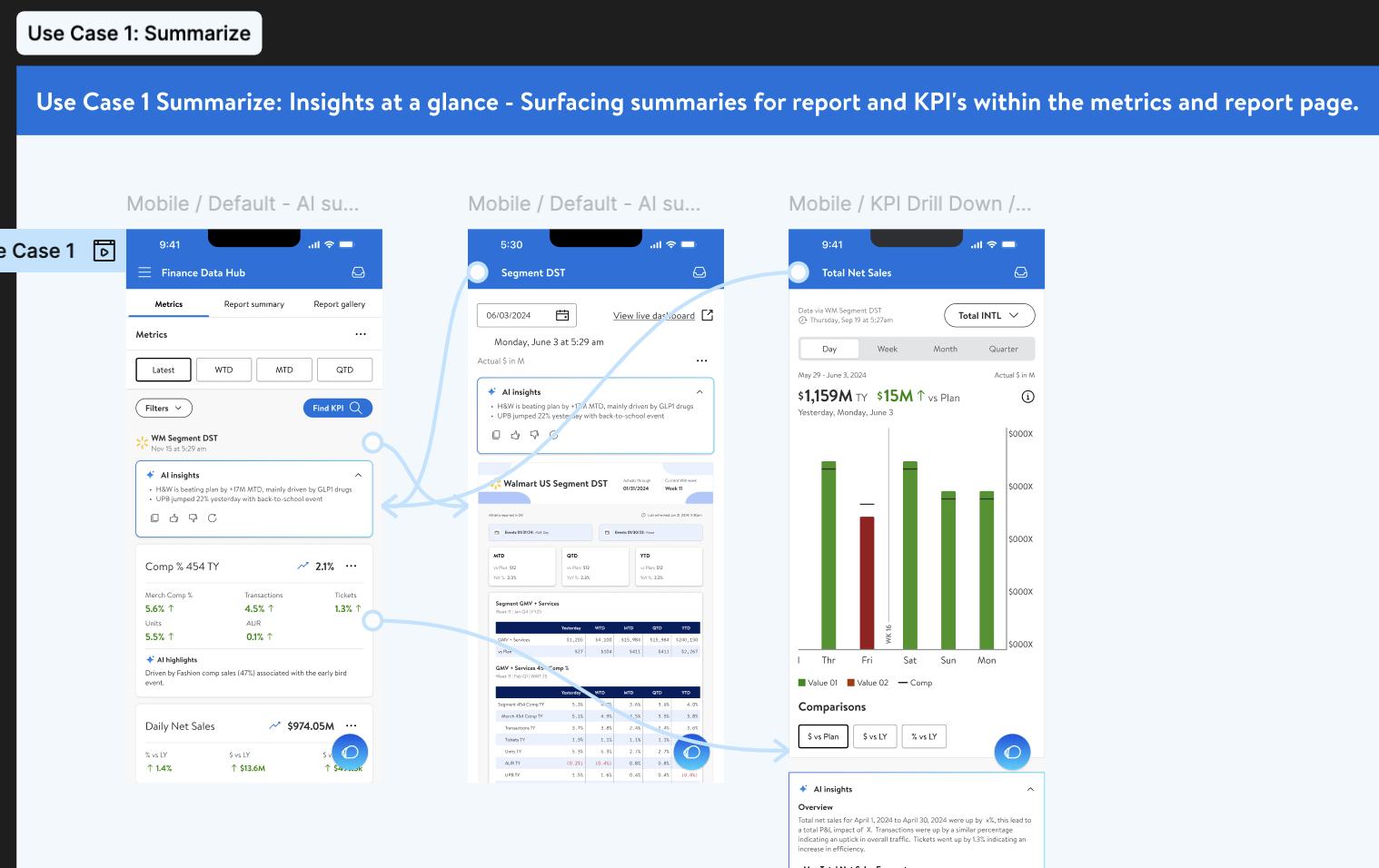
UX for the AI integration layer: how findings were surfaced, how key insights were prioritized, how users could trace any recommendation back to its source. Prototyping validated the trust patterns before build.
Key design decisions
- Recommendation transparency. Every AI recommendation is labeled with its confidence level and the data sources that informed it. Users aren't asked to trust a black box.
- Source traceability. Users can follow any recommendation back to the underlying transaction or trend data. The path from insight to evidence is always one click.
- Hierarchy-aware surfacing. Recommendations appear at the level of the financial hierarchy where they're actionable, not at the top of every view, where they would interrupt investigation rather than support it.
- Key findings highlighted. Rather than surfacing all AI outputs equally, the interface prioritizes the insights most likely to change a decision.
Outcomes & impact
87.5% user satisfaction. Presented to Doug McMillon's leadership team as a model for responsible AI integration at the enterprise level.
- AI recommendation layer designed for transparency and user trust
- Key findings surfaced in a way finance users could understand and act on
- Prototype findings validated AI transparency requirements before build
- Presented to executive leadership as a model for enterprise AI integration
- Demonstrated practical application of AI-assisted design workflow