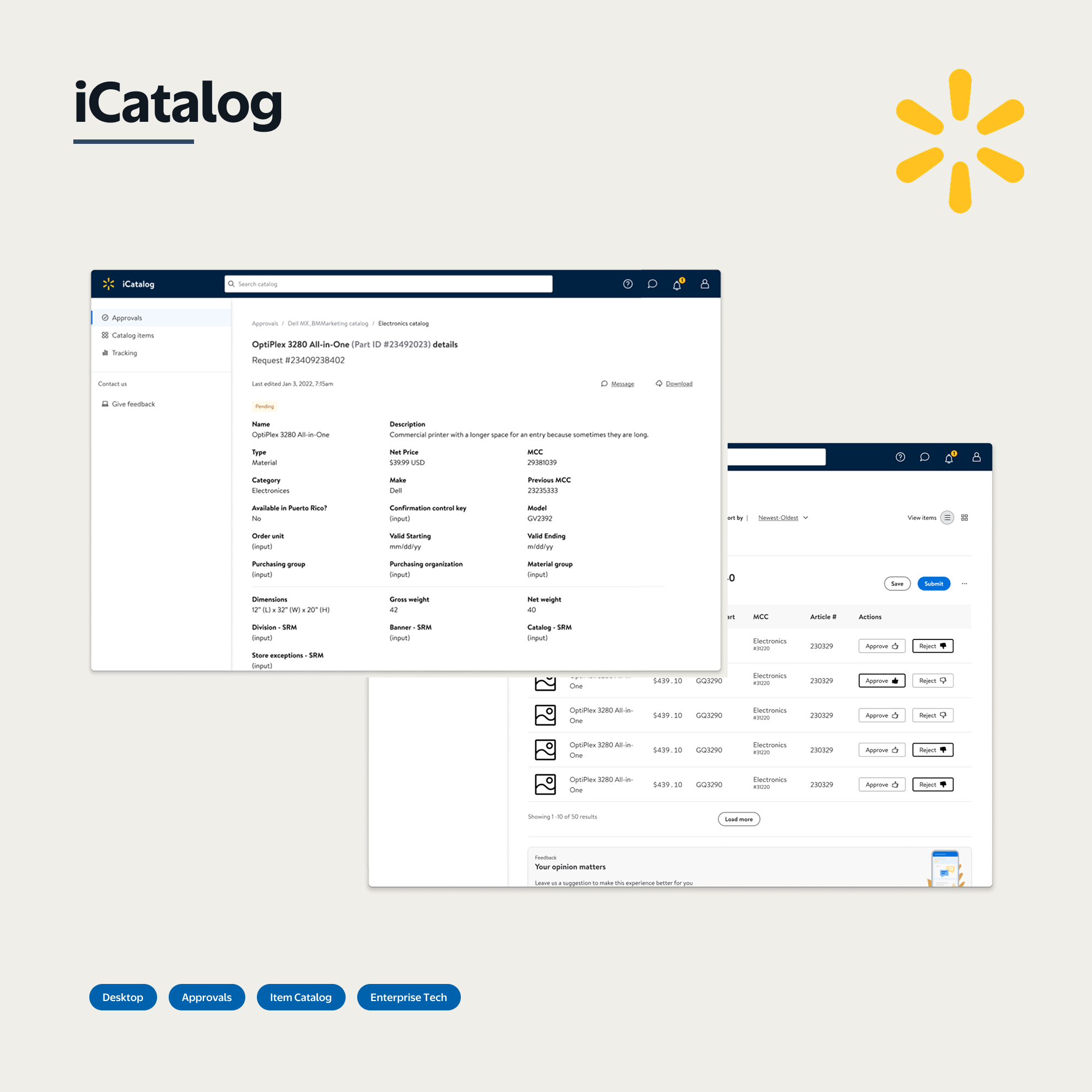
iCatalog stocks every Walmart in North America. Sourcing managers work with suppliers to bring item catalogs into the system — and approvers had been making those decisions without the context to make them confidently. The interface surfaced the action but not the history, flags, or rationale needed to evaluate it. Coming in mid-stream, I had two things to resolve at once: the approval experience itself, and a documentation gap that had been creating misalignment between UX intent and engineering interpretation on prior features.
The solution was targeted, not ambitious. History, flags, and change records surfaced inline — within the approval interface, no navigation required. The bulk approval flow let approvers work through a full catalog request in one session. The item detail page gave them the full approval trail, so they could evaluate exactly what changed, why something was flagged, and what happened in prior review cycles. Nothing required new pipelines or new system overhead.
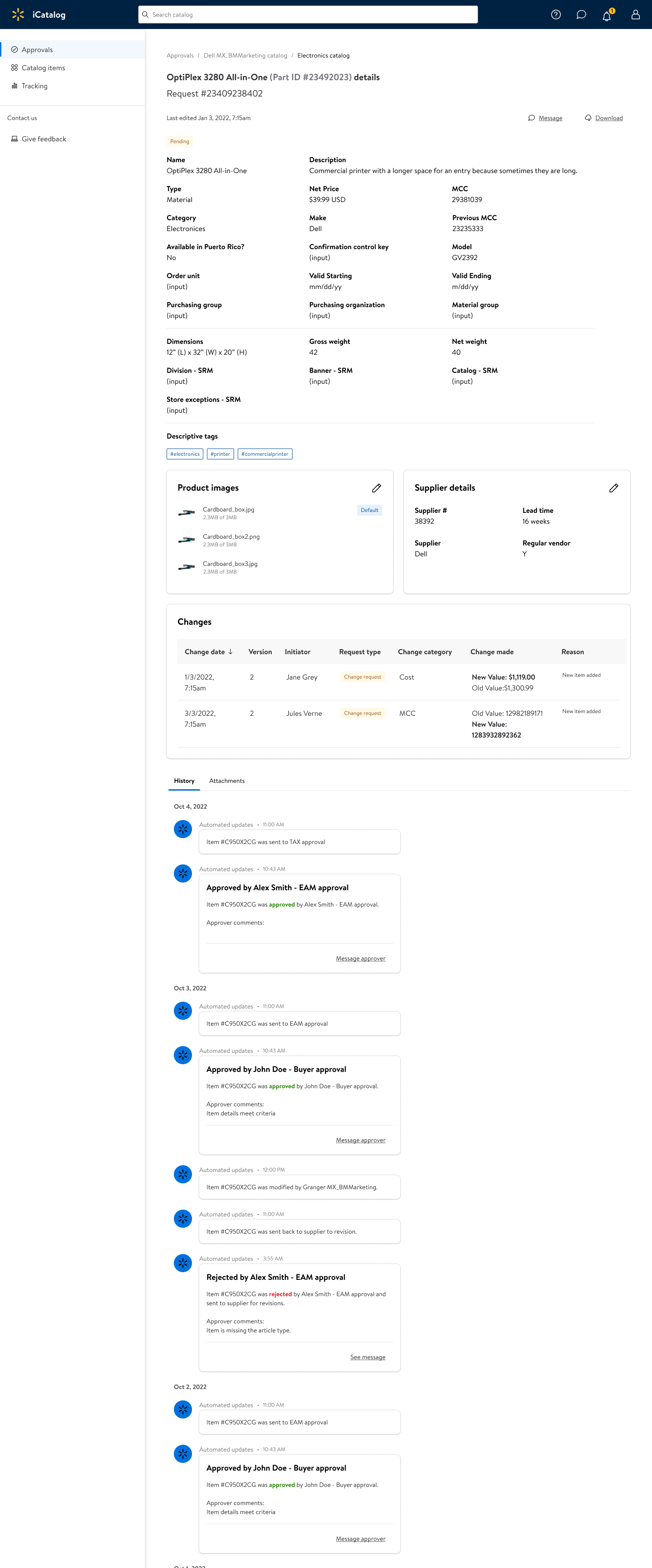
Delivered on time. Handoff documentation was treated as a design deliverable — it identified the gap causing downstream confusion and was adopted as the reference standard for future iCatalog work.
Approvers went from making consequential catalog decisions with incomplete context to having the full history, flags, and change records in front of them — inline, no navigation required. The bulk flow meant a full catalog request could be reviewed in one session instead of piecemeal. Arriving mid-stream also meant inheriting a documentation problem: UX intent had been misread by engineering on prior features. That gap got closed in the same pass.